
Preached on the Seventh Sunday of Easter (Year A), May 17, 2026, at St. Paul’s Episcopal Church, Seattle, Washington by The Reverend Stephen Crippen
Acts 1:6-14
Psalm 68:1-10, 33-36
1 Peter 4:12-14; 5:6-11
John 17:1-11
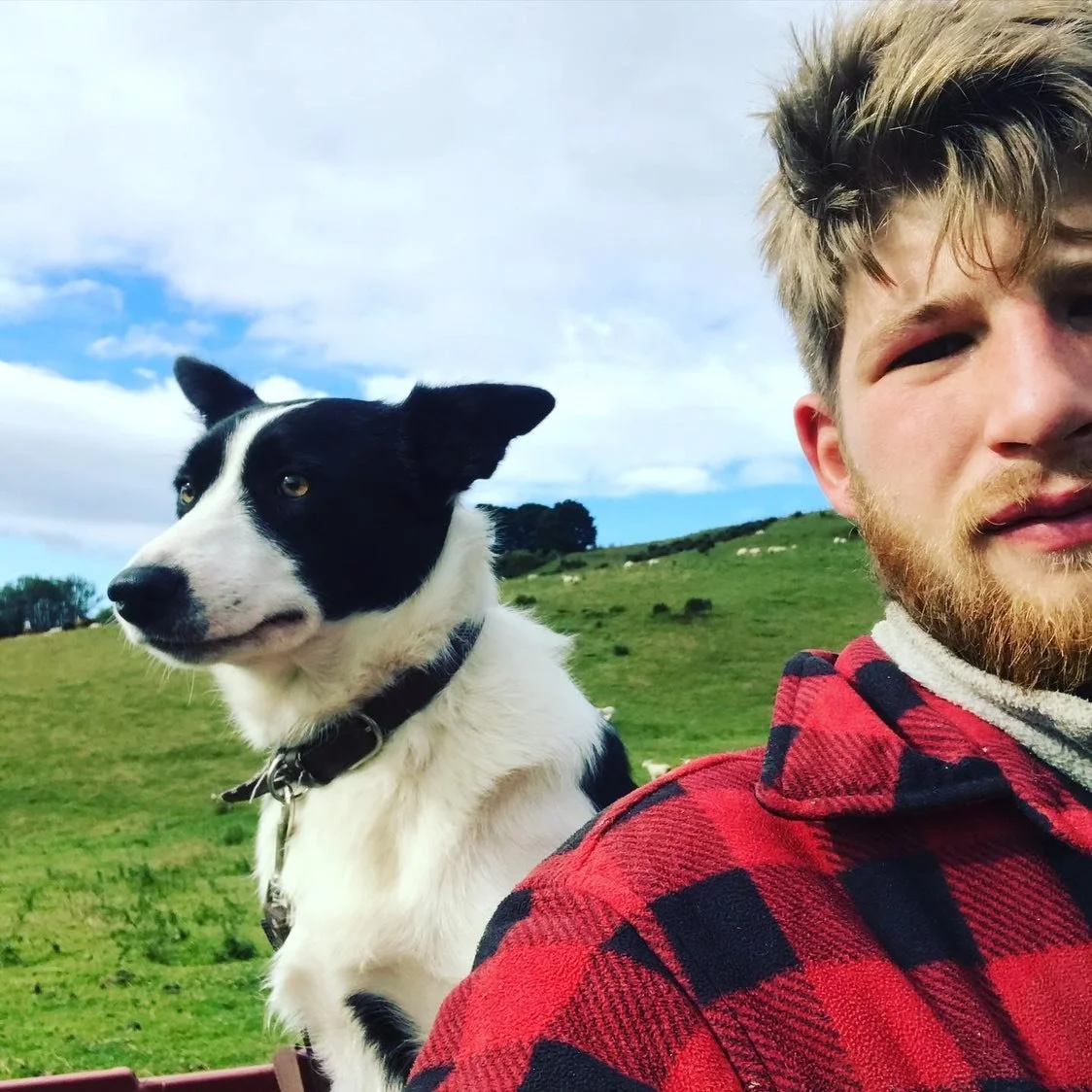
Lately I have spent considerable time watching videos posted by Sean Hannah, a sheep and cattle farmer in Scotland. His handle is “Sean the Sheepman.” I won’t attempt his accent but it is a reliably charming Scottish burr.
My nervous system regulates and calms down as I watch videos of Sean and his border collies, Kate, Storm, Echo, and Copper, herding sheep. The dogs rocket away from their boss, hearing his commands from hundreds of yards away. Their speed is astonishing. “Come bye,” he calls, and they know to run clockwise. “Away!” means counter-clockwise. “Walk on,” he says to encourage them to keep going. And of course, “That’ll do,” the signal that they’re done, at which point they zoom back to him and hop on their rough plastic mesh perch on his truckbed. Look him up — Sean the Sheepman. Your nervous system will thank you.
Sean posted a ten-minute video some years ago, recounting his personal history and how he came into this line of work. In the video he mentioned Haig, his first border collie, and of course I immediately wondered what happened to Haig: Sean looks quite young; he hasn’t been at this for a whole lifetime of a dog, has he? No. Haig ate something toxic and died suddenly. Sean said — in a graphic on the screen, not verbally — that he still has a hard time talking about it. Of course he does. I know this feeling well.
You can watch Sean as he goes about all the chores of a working farm, like the video where he shears the hind ends of the sheep at a certain point in the season. Their backsides need early shearing to prevent flies from laying eggs there, which would grow into maggots. This detail, along with the countless absurd bare tails of the sheep, make for a fairly ridiculous (and somewhat disgusting) video.
This past week I watched one of Sean’s particularly poignant videos. He was attempting to convince a cow to accept a calf that was not her own. The calf’s birth mother had rejected it for some reason, and the calf was slowly starving. The (hopefully) new mother, meanwhile, had suffered the death of her own calf, but hadn’t accepted the loss. She kept the lifeless body near her. The cow with a healthy calf didn’t seem to want one. The cow who wanted a calf was bereft.
Sean’s solution was, well, a little intense. A graphic on the video popped up, saying, “I’m sorry if this is upsetting.” Off camera, Sean had skinned the dead calf and made a little jacket with its hide, and fitted the jacket onto the starving calf. Then he introduced the calf to its new mother. She sniffed the jacket, made some calm movements, and went back to eating hay.
Three hours later, Sean returned to the pair, and to his delight the calf was nursing vigorously: it worked. All was well.
I watched this video, as it happens, on Mother’s Day. I realized that for every creature on that farm — the sheep and their bleating lambs who need dogs to scare them into their pens; the bemused cows and their helpless calves; the hardworking border collies — for every creature on that farm, including the mother cow who rejected her healthy calf, Sean was the über-mother. They all depend on him. He keeps them together. He looks out for their safety. He trains them, feeds them, shears them, serves as their midwife, grieves their deaths, leads and follows them in their rhythms of life and loss.
I suspect that life on a rural Scottish farm is mostly foreign to everyone in this room, though I can still remember the smell of livestock, having grown up in a small Midwestern town. But I sometimes worry that the bonds of love on that farm might also be foreign to us.
Ours is a segmented, complicated, hectic world. We do not always live as Jesus Christ expected, or instructed, us to live. “All mine are yours, and yours are mine,” Jesus prays to God the Father. “Protect them in your name that you have given me, so that they may be one, as we are one.” These solemn and even majestic words come from the great prayer of Jesus in John, often called his High Priestly Prayer. But it’s a prayer for powerful intimacy.
Listen more closely. I wonder if you can hear in his prayer the profound and poignant identity of Jesus the Good Shepherd. Listen to these particular phrases:
While I was with them, I protected them.
I guarded them.
Protect them from the evil one.
As you, Father, are in me and I am in you, may they also be in us.
…I in them and you in me, that they may become completely one…
…that the love with which you have loved me may be in them, and I in them.
These are just a few of the lines in this lengthy, dense, and wondrous prayer, but can you hear the bracing intimacy? I hope you can hear the passion, the compassion, the all-consuming love that draws the Holy Three so astonishingly close to the beloved human community.
Their love pulls us into dreadful but unspeakably joyful places: Like Sean Hannah grieving the sudden death of his dog, we are torn in two by grief when we love one another as Christ loves us.
Like Sean calling out to his tireless dogs as they zoom around the impossibly green Scottish landscape, we are in tune with one another, responsive to one another, our ears and eyes alert to one another; and we energetically respond to one another with alacrity and speed.
Like Sean shearing the smelly bottoms of his sheep, we love one another even when we are at our most unlovable, and we craft wedding vows that remind couples that their bond holds them in sickness and health, in poverty and wealth, they don’t get to pick and choose.
Like Sean rejoicing over a nursing calf, we rejoice over the triumphs and glories of our ordinary lives, the parent glowing with pride about her kid’s third-place ribbon at a high-school track meet. Our little victories and achievements delight us, and brighten God’s good world.
But also — like Sean skinning the poor body of a dead calf, we are covered in mud and blood as we grapple with the hardest tasks of life in community. We stay close to those who are staggering under incomprehensible grief. We stay at our posts when the world is raging and we are trembling with fear. We take our faith seriously, and we take one another seriously, and we know well that loving one another as Christ loved us puts us on his Via Dolorosa, his Way of Sorrows.
And don’t forget Sean’s lesson about the cow who rejected her calf. Why did she do this? I am not bovine: I have no idea. It was not a moral failing (this is a cow, after all). It probably was just instincts and scent, the ordinary chances and accidents of life on a farm. But Sean was that poor cow’s mother, too. He cared for her, no matter that she forced him to solve a hard problem. Life in community is often inexplicable, frustrating, shocking, sad, hard. Sean teaches us to care for the imperfect creatures around us.
This is the great insight, the dreadful, majestic teaching, of Jesus in the Gospel according to John: The Father, Son, and Spirit descend all the way down into our proverbial cattle stalls and sheep pens, the places of messy struggle where we live, where we work, where we hope, and where we sometimes feel despair. Down here on this “livestock farm” of ours, this Christian community, The Holy Three dwell. They turn our hearts. They open our minds. They guide our hands. They form us to look outward with rough and sometimes wretched love for one another, for our neighbor, for the stranger.
And then the Father, Son, and Holy Spirit raise us in bright glory as beacons of tender mercy in this lovely world. “Away,” Sean says to his dogs, and they lurch counter-clockwise to bring the sheep to safety. “Away,” God calls to us, and we lurch ever outward to seek and save the lost on this holy and green livestock farm.
Finally, one day, each of us will hear the call home, and follow the arc of incarnation traced by the risen Jesus himself, our Great High Priest who came down to our muck, and then rose up to glory. Working together, living together, loving one another even (and especially) when that love is difficult, we will all hear that blessed shepherd call —
That’ll do.