
Preached at the Requiem Mass for Robin Allan Jones, February 7, 2026, at St. Paul’s Episcopal Church, Seattle, Washington by The Reverend Stephen Crippen.
Isaiah 25:6-9
Psalm 121
Romans 8:14-19, 34-35, 37-39
John 20:24-29
Do you like getting things right? Perhaps that is a universal trait, something all humans have in common, but I really wonder sometimes if every one of us is truly wired in this way. I always felt good when an exam or term paper came back with a high grade, and I definitely have felt better about my work over the years when someone said, “That’s right, yes, you did that correctly.” But… I tend to flex about things. Maybe you do, too. Did we mostly get it right? If so, maybe that’s good enough for us. “Progress, not perfection,” goes the bumper sticker.
But that’s not Robin’s way. Robin gets things right.
Robin comes early on Sundays to practice. You’ll find him swinging the thurible, up and down the main aisle in here, and you’ll check your watch and wonder to yourself, “How — not just why but how — is he here well over an hour early for mass, just to practice something he’s done countless times?!” Or you’ll walk up the short staircase over here and hear Robin singing in the chapel. He’s rehearsing his lines for the Prayers of the People. He has sung them many, many times before. But here he is, practicing them yet again.
Robin is working hard to get things right.
As a minister of the ceremony here at this altar, Robin prepares carefully, reviewing the bulletin, studying it, reading, marking, learning, and inwardly digesting it, until he has a short speech ready to inform the rest of us of all that is about to take place. In all of this, Robin cares for this assembly. Exactitude is one of Robin’s love languages. Diligence, conscientious attention, deep and sometimes even stern respect for the right way to do things: these natural inclinations of our brother in Christ have sustained and nourished this assembly for decades now.
And so it may bother Robin that one thing I am getting wrong right now is the use of the present tense when describing him, for the self-evident reason that we are all here today to mark Robin’s painful absence from our immediate company. But if Robin is bothered by that, I will stand by it nonetheless: Robin, I am certain, is still here, if beyond our immediate sight and sound. Robin is a descendant of Saint Thomas, one of the Twelve, and Thomas has never left the Christian assembly. Like Peter and Mary Magdalene and all the saints, Thomas remains with us, in the great cloud. Robin, too, is close at hand.
And speaking of Thomas, today we heard again, in an enigmatic aside by John the Evangelist, that Thomas was called “The Twin.” This is probably not the evangelist’s report that Thomas had an actual twin sibling (though who knows, perhaps he did). It’s probably a literary hint by the evangelist that we readers of the Gospel can insert ourselves, if we like, in Thomas’s role, that we are his twin sibling.
Give it a try: Thomas the Twin wasn’t there when the risen Jesus appeared to his closest friends. That’s true about us. Thomas the Twin is eager to know what exactly happened. That’s certainly true about many of us, if not all of us. And Thomas the Twin wants to get things right. He heard the reports that Christ was risen, but he wanted the details. He’s like us going into the New York Times app and clicking on story updates (something I personally did just yesterday): we want to know what exactly happened.
And Thomas consistently was this kind of a person in all of his appearances in John’s Gospel. SIx chapters before the resurrection in John, Jesus says, in his mystical way, “If I go and prepare a place for you, I will come again and will take you to myself, so that where I am, there you may be also. And you know the way to the place where I am going.” At that moment, in my reading of the encounter, Thomas has a very Robin Allan Jones expression on his face when he says back to Jesus, “Lord, we do not know where you are going. How can we know the way?”
But here’s the best part about Saint Thomas, and about his twin, Saint Robin: They develop; they grow; they get out ahead of us and show us a path of transformation. Thomas demands to see the terrible wounds of Jesus, who had been brutally executed by the government in a public show of force (an atrocity we are again seeing happen in our own place and time). But when Jesus appears and invites Thomas to directly examine the wounds — “Put your finger here and see my hands,” Jesus says; “reach out your hand and put it in my side” — Thomas does not need to do it. He transcends his previous, demanding self. He opens himself up to faith. Thomas grows.
Despite certain vivid paintings of this scene by artists, paintings that have Thomas gruesomely sticking his finger into an open wound, the Good News according to John doesn’t record that. Thomas simply gapes at Jesus and proceeds to call him God. “My Lord and my God!” Thomas shouts. This is probably a direct borrowing from Psalm 35, where the psalmist sings:
“You have seen, O Lord; do not be silent!
O Lord, do not be far from me!
Wake up! Rouse yourself for my defense,
for my cause, my God and my Lord!
Vindicate me, O Lord, my God,
according to your righteousness…”
All this enthusiastic and vigorous prayer, this shouting with surprise at the Risen One: all of this sounds, in my hearing, like our own brother in Christ, Robin. Robin is, as I’m sure you know, not just eager to do things right. He also does things with enthusiasm, with energy, with urgency. If someone here at St. Paul’s is going to be the first among us to call Jesus God — and take note: Thomas is the first saint in the New Testament to do so! — the first person to shout “My Lord and my God!” will probably be Robin.
Now, like Thomas, perhaps Robin sometimes comes across as impulsive, or impatient; maybe, on a feisty day, Robin and Thomas are brash companions of ours, sometimes in ways that can be a lot for the calmer among us to understand or appreciate. But Thomas and Robin are tremendous evangelists, and they are willing to learn, willing to grow, willing to move from where they once were. They are robust examples for us of faithful discipleship.
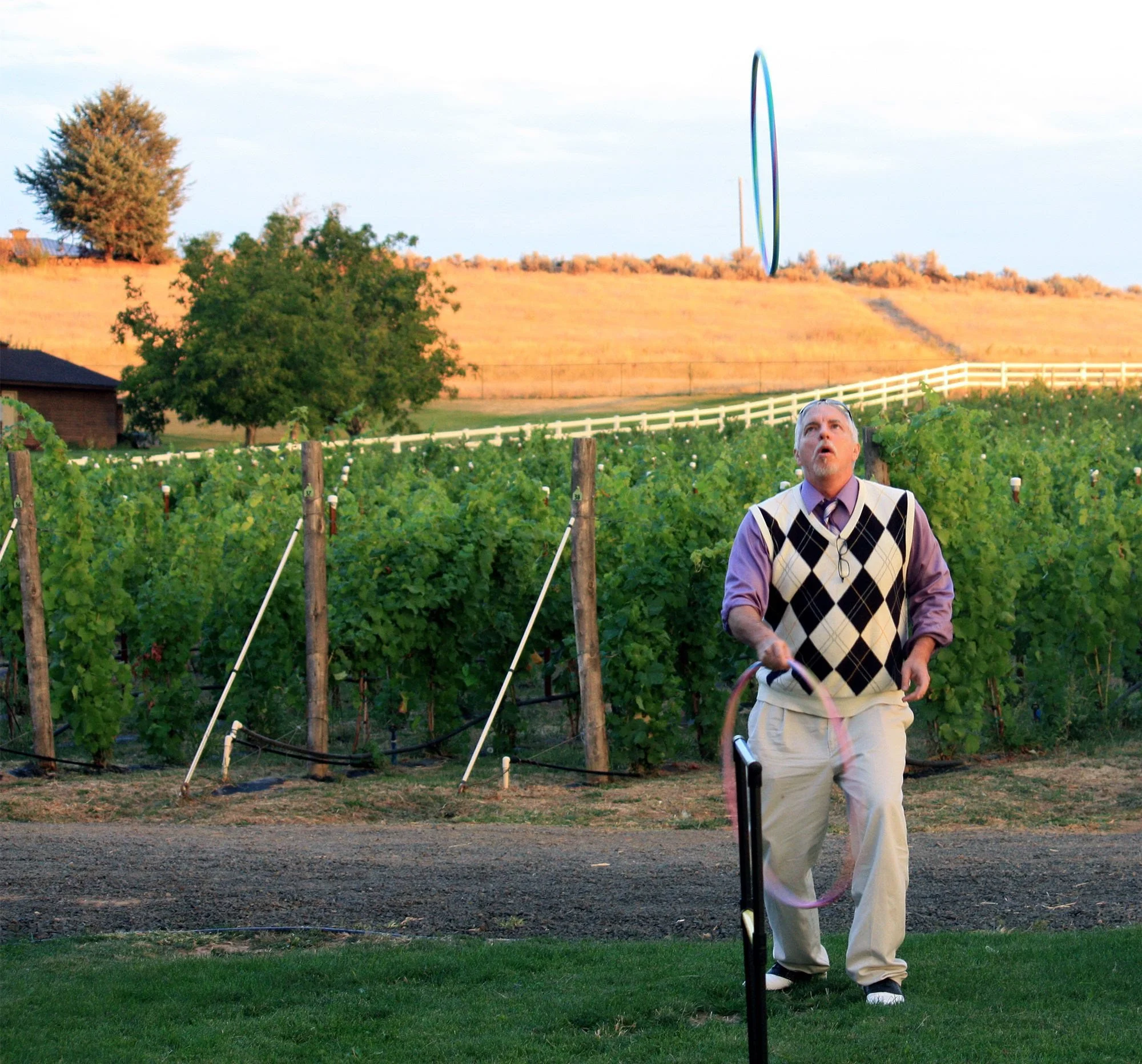
And Robin also makes it fun. Robin is a juggler and a pirate. Robin is a character actor and an entertainer. Robin is playful, sometimes silly, endlessly creative, and possessed of an infectious young-at-heart desire to savor this colorful world. In these activities, Robin is again a robust example for us, particularly now, in a time when the powers and principalities are trying so hard to suppress our good spirits and discourage our stout hearts.
Little do they know that we count Thomas and Robin among our companions. Instructed by their examples, guided by their prayers, evangelized by their faith, and goaded by their bracing good spirits, we will flourish here on God’s holy mission for many, many more generations, with Robin firmly by our side.